
Prepare and build a camera
Choose light-sensitive photographic paper, make a pinhole, position the paper and seal the camera.
Beginner's guide · PDF ebook
From your first camera to the finished photograph
Build your own camera, record the Sun's path and turn exposed photographic paper into a finished image. I'll guide you through every step, with photographs, illustrations and advice drawn from my own experiments and mistakes.
Launch price until 1 November 2026.
See the current price on Naffy
English-language PDF · Purchase through Naffy
You are buying the English edition. The ebook and free sample on this page are in English. Polish and Spanish editions are also available.

The bright arcs in these photographs trace the Sun's path. The landscape, weather and passage of time combine to create an image on paper inside a camera.
These are examples of my solarigraphs. In the guide, I explain how to start making your own, from preparing a camera to working on the final image.
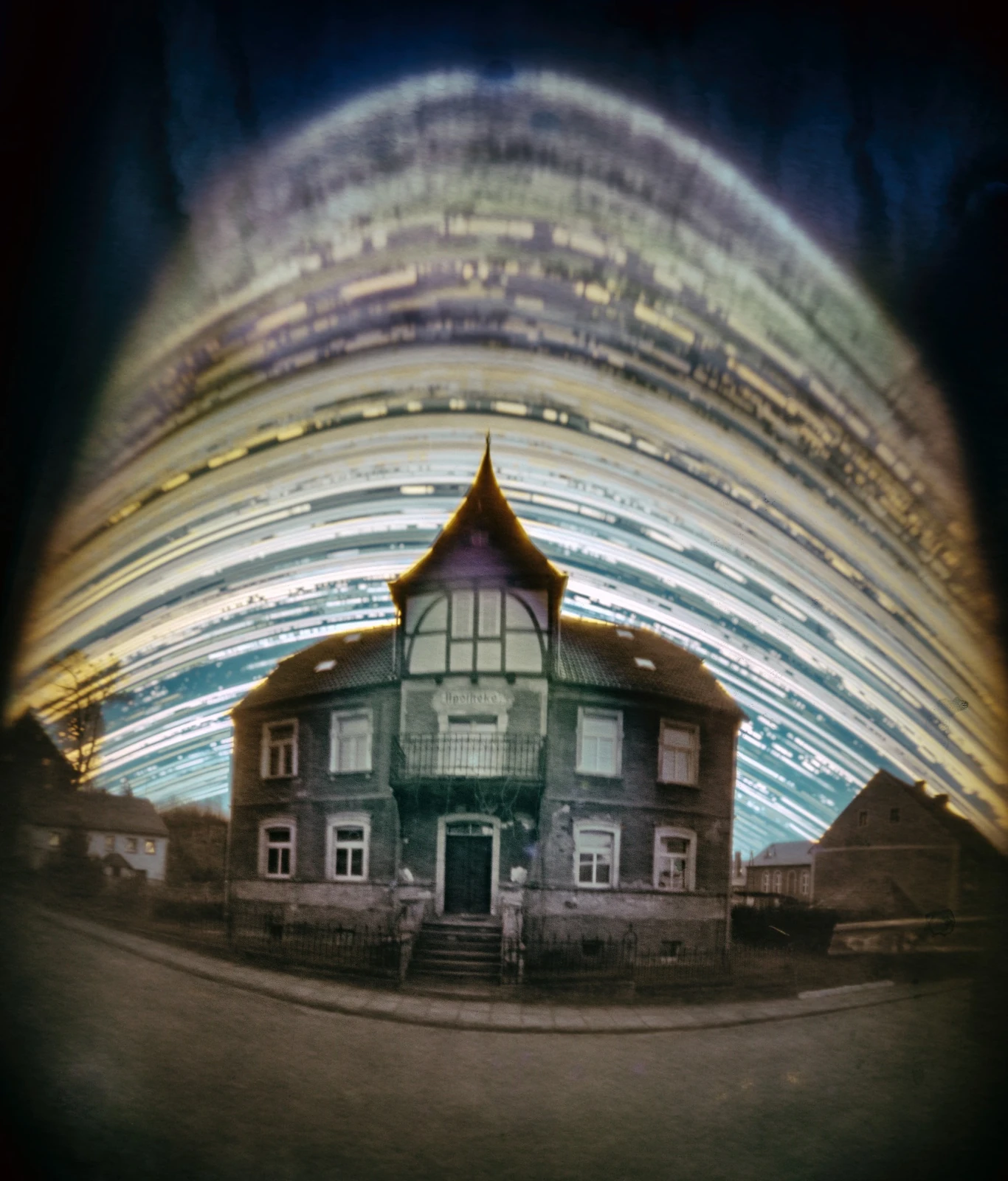


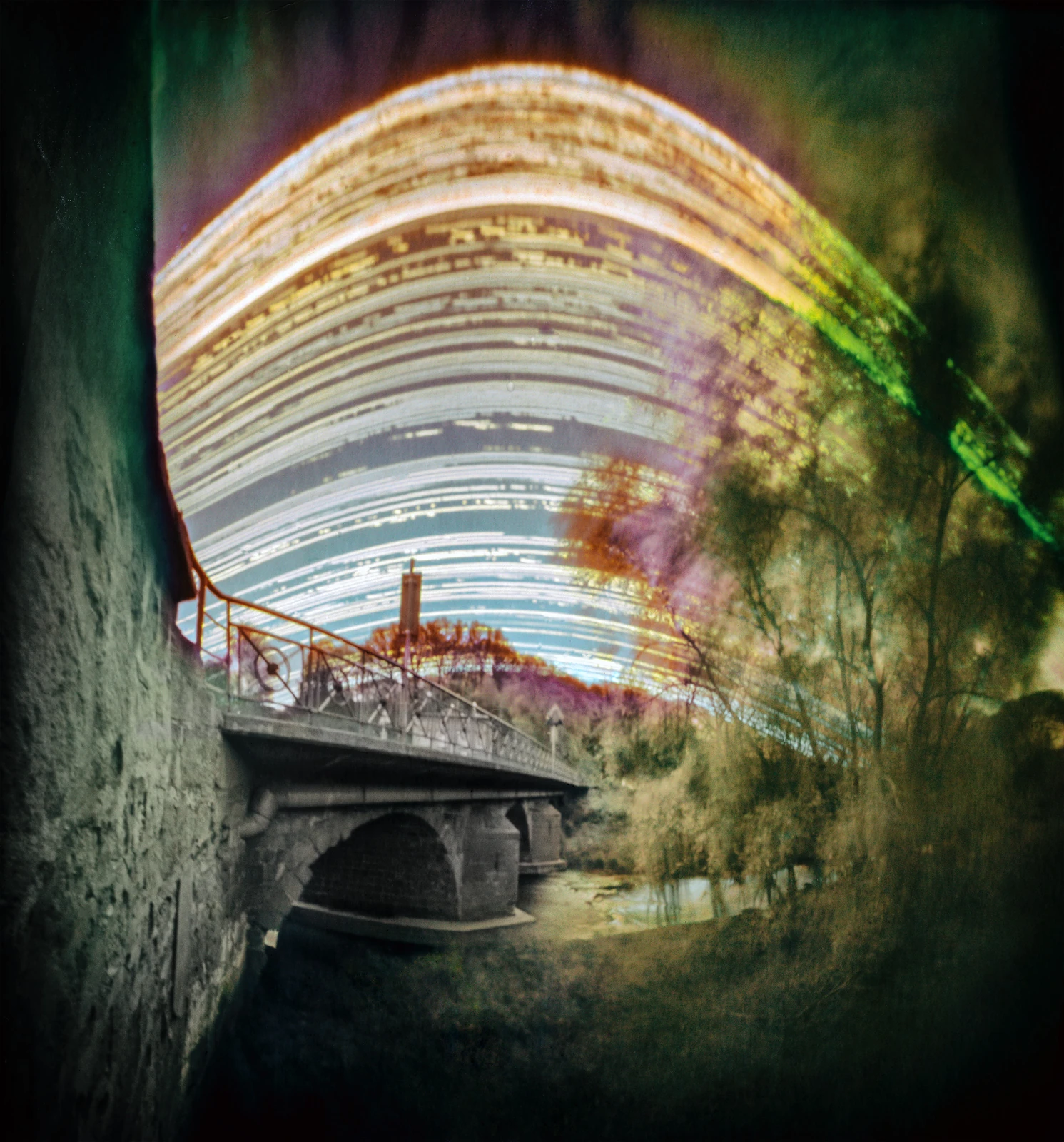


Solarigraphs by Dawid Rycąbel / Pinholove
I wrote this guide for people discovering solarigraphy and pinhole photography for the first time. It's also for anyone who has tried it but isn't sure why an image turned out poorly or what to change next time.
You don't need previous experience or a professional camera. We'll start with the basics and a simple camera made from a drinks can.
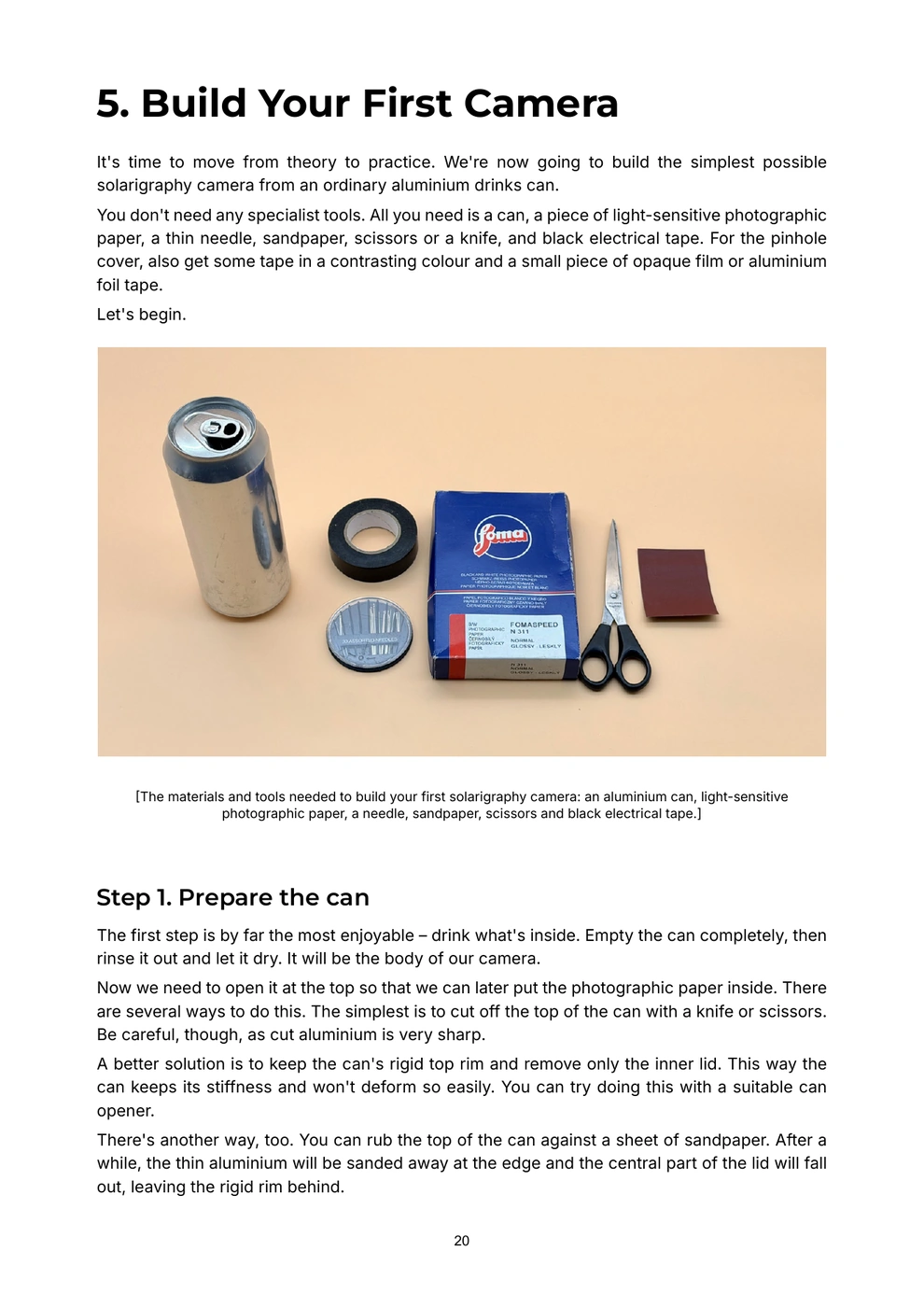
Choose light-sensitive photographic paper, make a pinhole, position the paper and seal the camera.
Understand how the camera's direction, surroundings and the Sun's changing path affect your photograph.
Learn what to watch for when mounting a camera and how short and long exposures produce different results.
Learn how to handle the paper after exposure, scan it and process the image digitally.
Explore possible causes of blank paper, faint images, blur, camera movement and other problems.
Discover unusual cameras and experiments to try once you've mastered the basics.
PDF · 122 pages
Camera-building instructions, mounting examples, photographs and side-by-side comparisons. See how the guide looks and how I explain each stage.
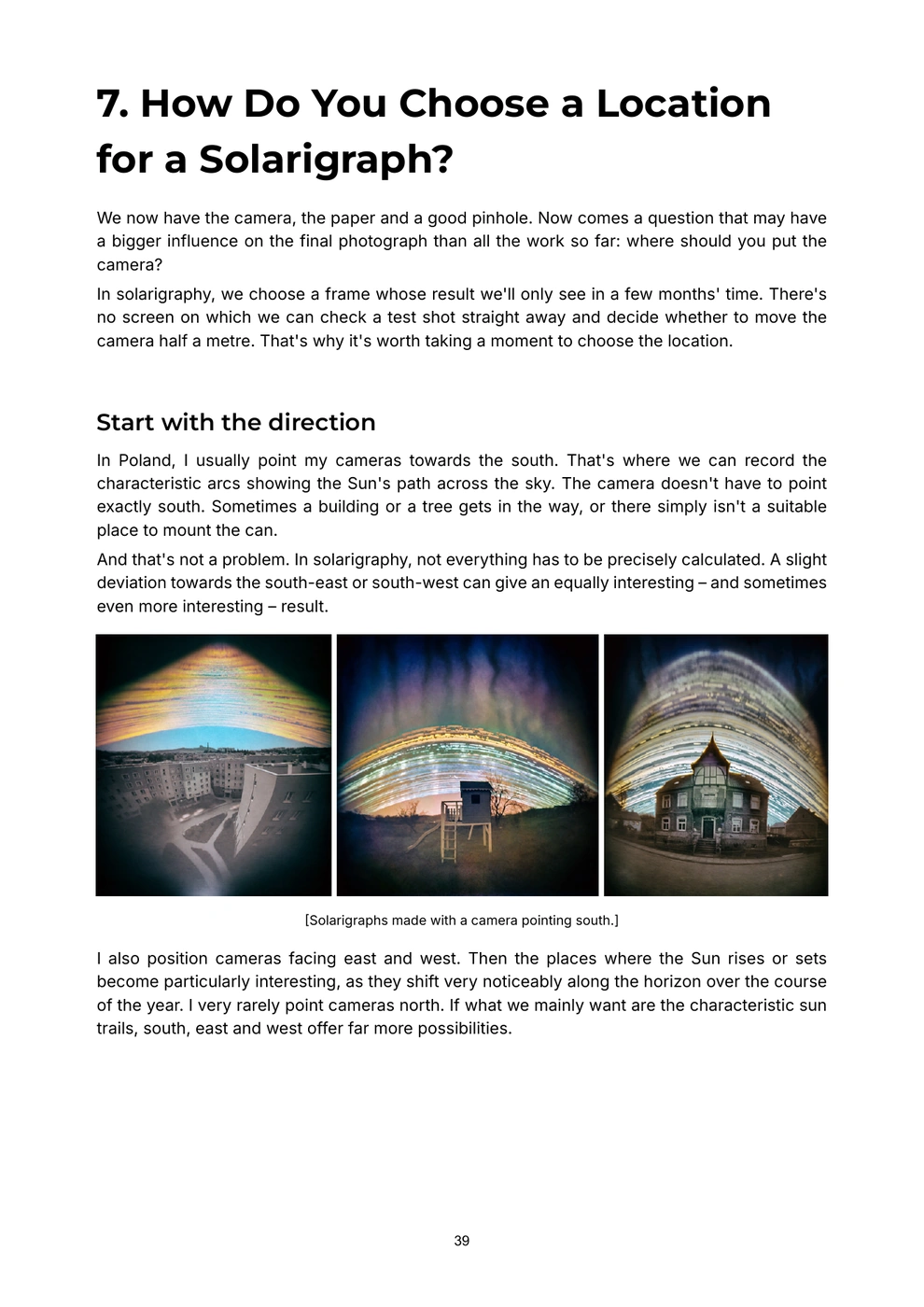

Download the opening pages of the chapter on choosing a location for solarigraphy. Explore example compositions, photographs of camera placements and an illustration of the Sun's changing path.
Turn pages with your mouse, a swipe or the buttons. With the reader focused, you can also use the arrow keys, Home and End.
Explore the guide without leaving this page. Read the 7-page free sample.
Sample in English. No sign-up required.
7 pages including the cover, contents and closing page. No sign-up or email address required.
15 chapters
122 pages, 15 chapters and a final checklist to return to during your own experiments.
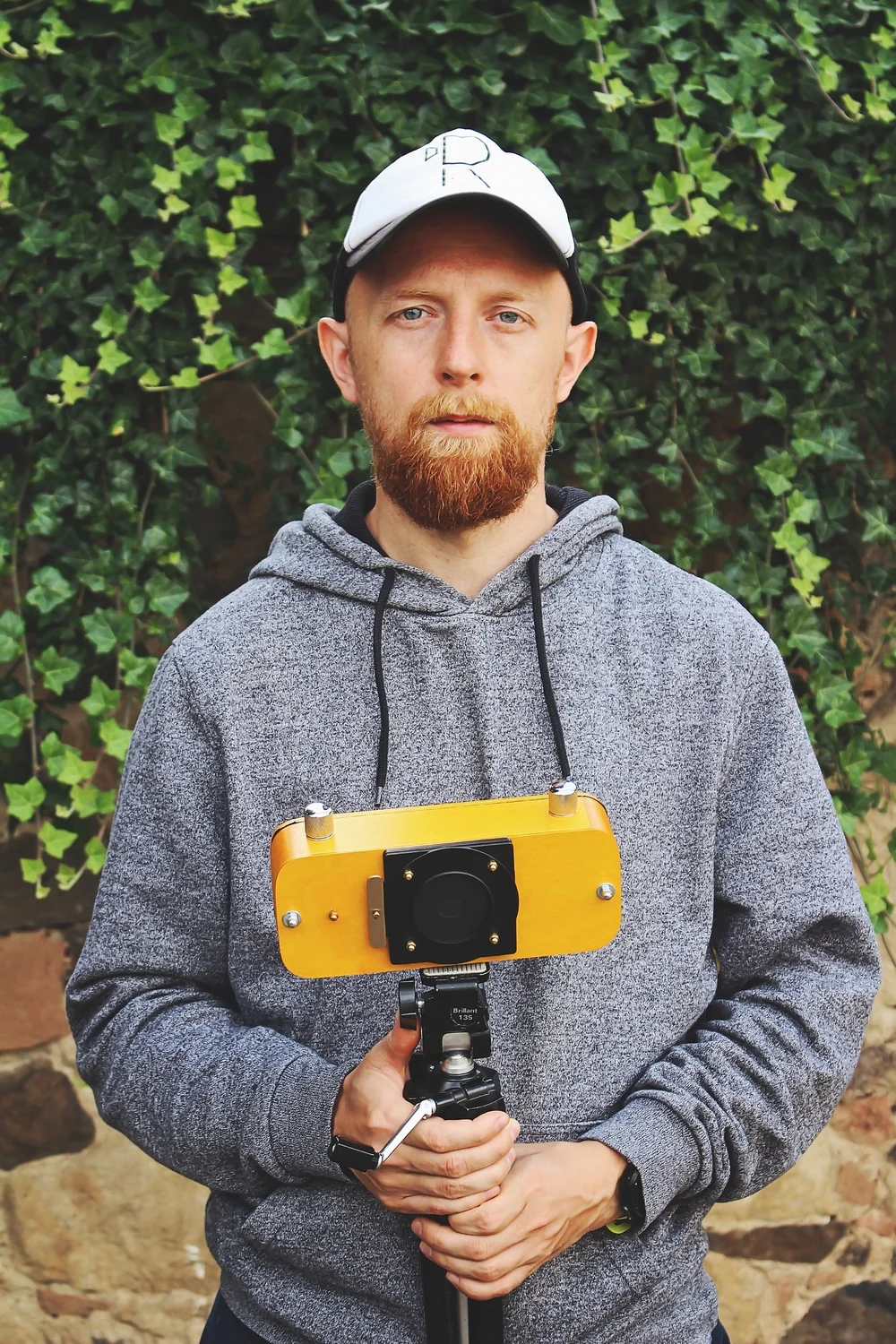
About the author
Creator of Pinholove
My journey into pinhole photography and solarigraphy began in 2018. Since then, I've been experimenting with camera designs, photographic paper and exposure times.
Not every attempt produced a successful image. There were flooded cameras, failed exposures and photographs that looked nothing like I'd imagined. Those experiences helped me understand what works and what to watch out for.
I wrote the guide I wish I'd had when I started. It takes you from your first camera to a finished photograph, helping you get started and avoid mistakes whose effects may only become visible months later.
Dawid / Pinholove
„This book will save beginner solarigraphers months of mistakes we've all been through. Great work, Dawid!”
Jakub Sągajłło-Frączkiewicz
„The book covers the topic thoroughly, ideal for beginners and advanced readers alike (...). You can build a solargraphy camera simply and easily from cheap, widely available things. (...) The book will largely save beginners from mistakes and fill in the gaps for everyone else.”
Michał Klupś
„I've read it and warmly recommend it. The e-book clearly guides you through the entire solargraphy process, from the idea for a photograph through building a camera, mounting it, exposure, scanning and any further editing. Everything is illustrated with explanatory photos and graphics. Plenty of practical knowledge and ideas 🌼 Congratulations, Dawid!”
Dagmara Macioch
Translated from Polish.
Pinholove / PDF
The whole process in one guide: preparing a camera, planning an exposure, handling the negative and working on the finished photograph.
After purchase, you'll receive an email linking to your Naffy customer panel, where you can download the PDF.
Launch price until 1 November 2026.
See the current price on Naffy
Buy the English ebookYou'll go to Naffy to complete your purchase.
You are buying the English edition. The ebook and free sample on this page are in English. Polish and Spanish editions are also available.
Yes. I start with the basics: what solarigraphy is, what you need and how to build your first camera. No previous pinhole photography experience is assumed.
No. You can build your first camera from a drinks can. You'll need light-sensitive photographic paper, a needle and materials to seal the camera, among other supplies. The guide explains how to choose them.
No. The guide includes examples of different exposure times. Shorter experiments help you learn how the camera works, while months-long exposures record the Sun's path differently. Weather, paper and location also affect the result.
No. I demonstrate editing in Photoshop, but the basic operations can also be done in another editor, such as GIMP.
You are buying the English edition as a PDF, which you can read on any device that supports PDF files. Polish and Spanish editions are available on the PL and ES pages.
No. You are buying a PDF ebook. A printed copy is not included.
Yes. The free English PDF includes the cover, contents, pages 39-42 of the full edition and a closing page linking to the guide. You can browse it here or download it without providing an email address.
The purchase button takes you to my Naffy product page, where you can select an available payment method and complete your order.
After payment, you'll receive a purchase confirmation email with a link to your Naffy customer panel. You can download the PDF from there.
Yes. Naffy adds a personalised watermark containing the buyer's email address to the PDF pages.